Housing Sector Leaders Call on Province to Change Course on Community Housing Fund Suspension, and Indigenous Housing Fund Deferrals
 31 March 2026
 Leaders from across the housing sector are calling on the Provincial Government to change course after the cancellation of the July 2025 intake of the Community Housing Fund and the slowing of the Indigenous Housing Fund, moves that are impacting thousands of new homes for British Columbians.
“Losing this funding means that safe, secure, permanently affordable homes for almost 4,000 families will not be built,” said Thom Armstrong, CEO of the Co-operative Housing Federation of BC. “It also means that the capacity of the sector to deliver non-market homes in the future will be compromised. At a time when co-ops and non-profits are ready and able to build the housing we so desperately need, government must reverse this short-sighted decision and work with us to get these homes built.”
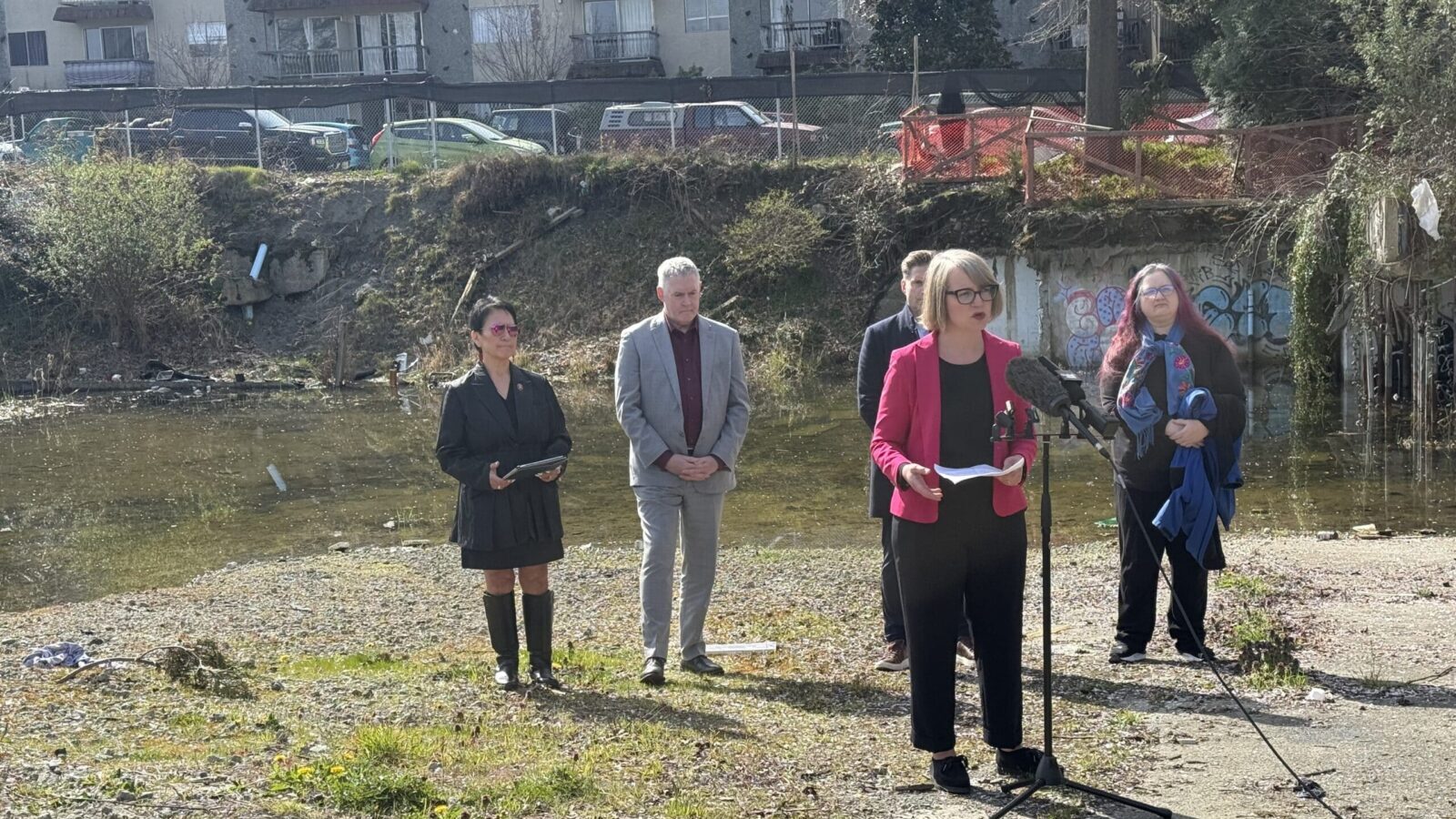
Representatives from the Co-operative Housing Federation of BC, the BC Non-Profit Housing Association, and the Aboriginal Housing Management Association were joined by TL Housing Solutions/TownLine Construction, a Vancouver-based development firm, and Board President of the Aaron Webster Housing Co-operative as they discussed the immediate and long-lasting impacts of these decisions. The cancellation and delays of the Community Housing Fund and Indigenous Housing Fund mean work cannot proceed on almost 4,000 new permanently affordable homes across the province. The decision impacts construction activity, local jobs, and investments in local economies across the province.
“We’re proud of how the sector has scaled up to meet historic provincial investment in affordable housing,” said Jill Atkey, CEO of the BC Non-Profit Housing Association. “Budget 2026 doesn’t just slow progress—it walks back commitments made to community housing providers, municipalities, and First Nations, at significant cost to those partners. The path government has chosen is the wrong one, but it’s not too late to change course”.
The Community Housing fund has been the backbone of non-market rental-housing delivery for years. It enabled non-profits and co-ops, municipalities and First Nations to do exactly what governments, and communities, needed them to do: assemble land, secure zoning, and bring forward shovel-ready projects to deliver homes quickly and affordably for those who need it most. As part of the 2026 provincial budget, non-profits, co-ops and municipalities were notified that all projects submitted in the July 2025 intake of the Community Housing Fund would not be proceeding, and that funding would be re-allocated.
“Community housing is essential in any society that proposes all people are worthy of equity, dignity, and well-being,” said Margaret Pfoh, CEO of the Aboriginal Housing Management Association (AHMA). “The Community and Indigenous Housing Funds are essential – they were established to keep people housed, safe, and healthy. AHMA members alone have lost 24 projects, almost 2,000 units of affordable homes that will not be built. This is unfathomable as families struggle to survive.”